High-risk counterparties
Screen wallets against sanctioned entities, scam infrastructure, stolen funds, ransomware, and other illicit clusters.

The AMLBot platform automates AML / KYC procedures and reduces compliance expenses
 INATBA
 CDA
CDA
 ATII
ATII
 LSW3
LSW3
 EBA
EBA
 FTAHK
FTAHK












Amount of the risky funds detected


Compliance departments that accept our AML procedures
Service providers checked
AMLBot combines wallet screening, transaction context, and ongoing risk intelligence to detect suspicious exposure before it turns into a compliance issue.
Screen wallets against sanctioned entities, scam infrastructure, stolen funds, ransomware, and other illicit clusters.
Review routing patterns, intermediary wallets, and abnormal transfers that indicate laundering, layering, or obfuscation attempts.
Prioritize alerts with risk scores, source categories, and investigation context so teams can decide faster and document every step.

We've recently identified an alarming rise in scammers impersonating AMLBot on various...
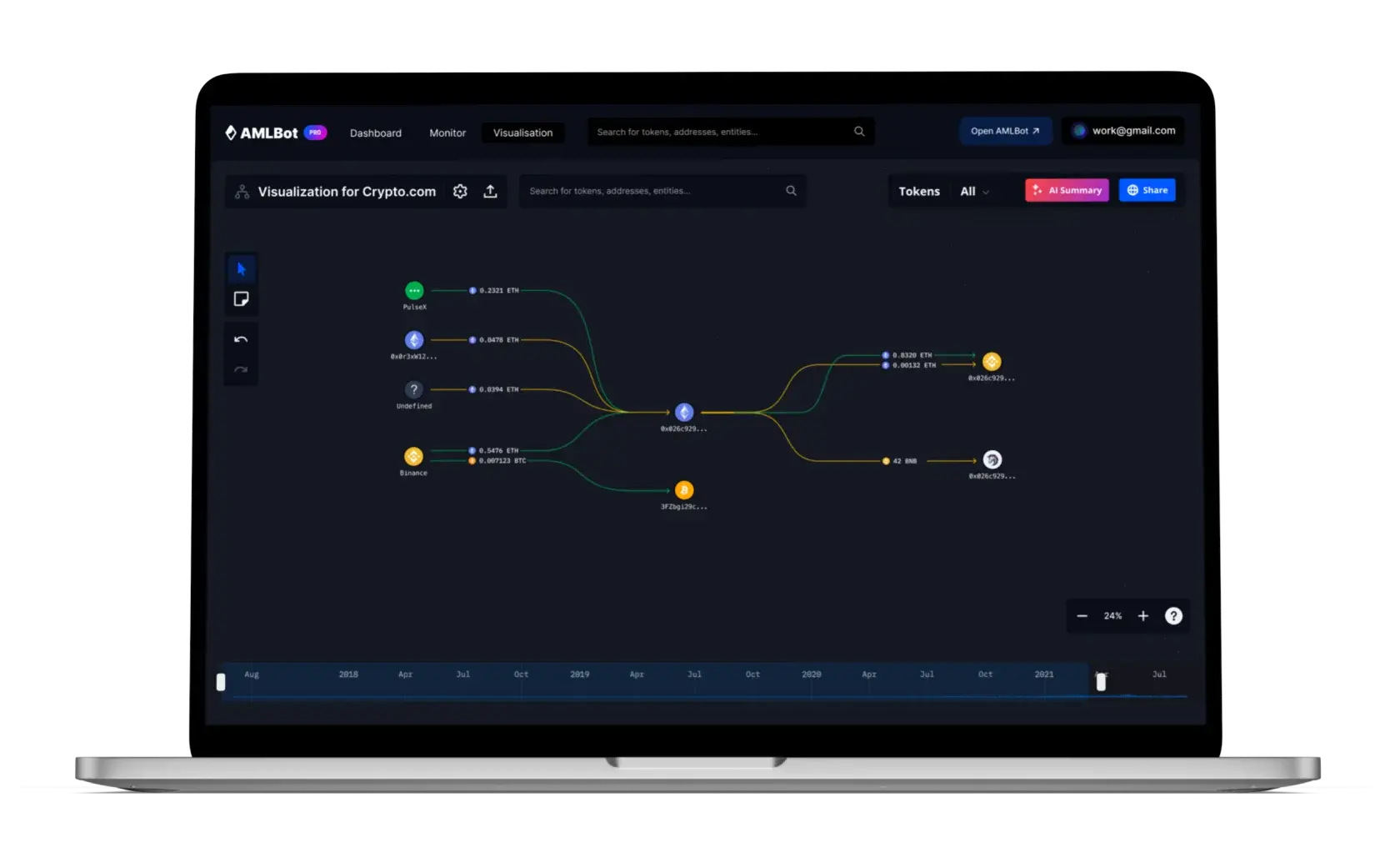
Transaction Monitoring — and its specialized counterpart, Know Your Transaction (KYT) are no...

What Happened? Earlier this year, a Czech company fell victim to an address poisoning...
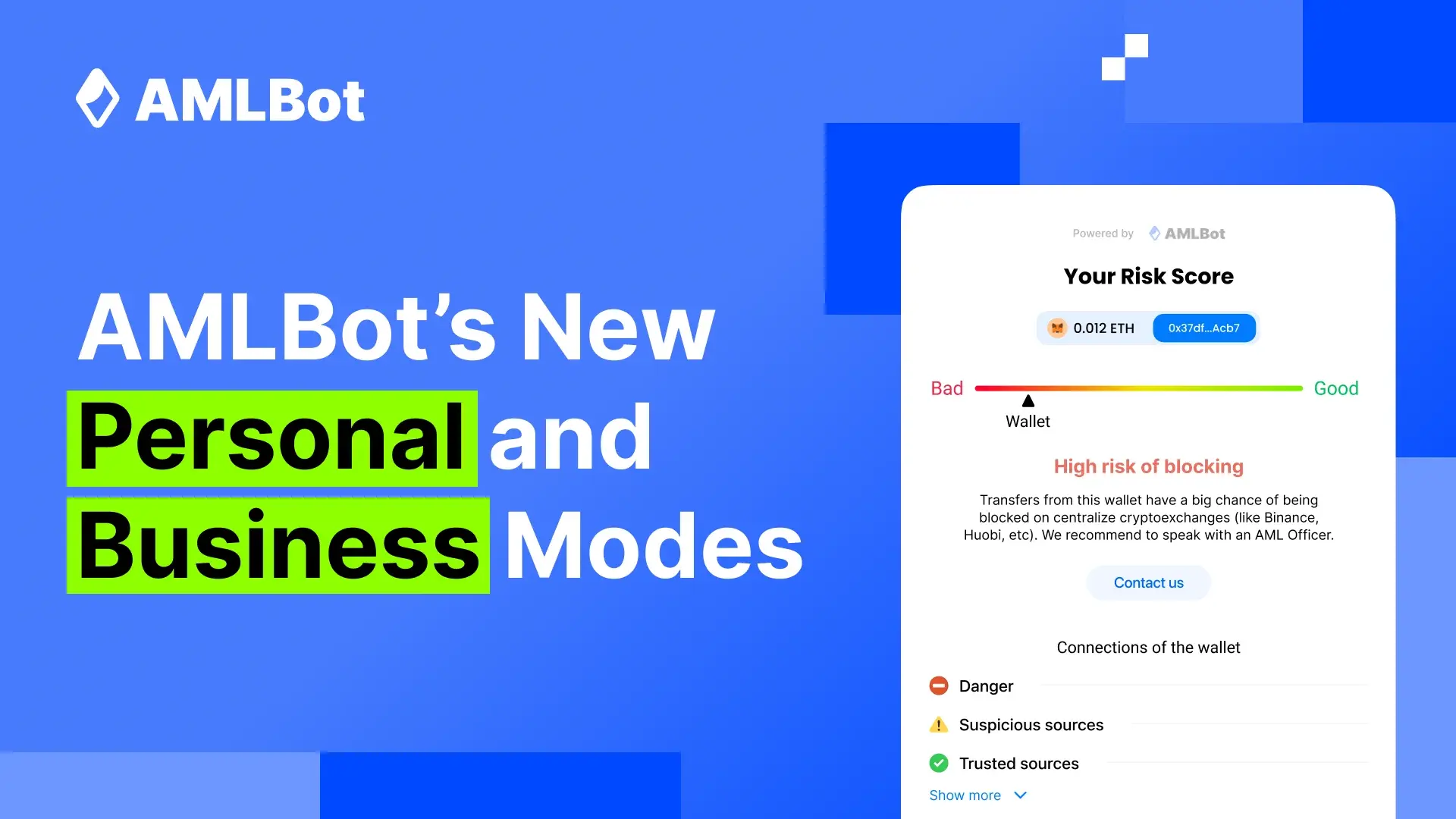
We've redefined our Risk Score to meet the unique needs of individual and businesses,...
We provide a complete set of solutions to help you work safely with cryptocurrencies.

API solutions that strengthen AML/CFT compliance tools within your current system. All transactions are automatically checked to ensure compliance with AML/CFT requirements and FATF standards while reducing your company’s exposure to risk.
Learn more
The simplified and automated verification process enables your company to onboard new clients quickly, reducing manual effort and mitigating the risks of identity fraud and illicit activity.
Learn more
Recover stolen cryptocurrency through AMLBot’s expert blockchain investigations, which quickly identify perpetrators and trace funds for efficient recovery.
Learn more
We continuously improve our security measures to ensure trust and protection. Learn more about our certifications.
Learn morePer AMLBot data, one in four wallets can be suspicious. A low-cost screening often prevents a much larger operational or reputational loss.
Flexible entry pricing for routine checks, onboarding reviews, and ongoing transaction monitoring programs.
AMLBot combines screening, KYC, and investigative workflows into a single compliance stack built for crypto businesses operating across jurisdictions.
AMLBot supports exchanges, OTC desks, brokers, and crypto infrastructure teams with compliance workflows tailored to their risk profile and operating model.
Let's discussCombine KYT, wallet screening, KYC/KYB processes, and investigation support without stitching together multiple tools or fragmented reports.
Support remains available around the clock through messenger and the support center so compliance teams can react quickly to urgent cases.
Open support center


AML (Anti-Money Laundering) compliance in crypto refers to the set of regulations, procedures, and technologies that companies must follow to prevent money laundering, terrorist financing, and financial crime.
It ensures lawful operations and strengthens trust with regulators, banks, and partners.
AML regulations are designed to protect the financial system. For crypto businesses, compliance reduces the risk of fines, license loss, asset freezes, or exclusion from banking services.
The Financial Action Task Force (FATF) sets international recommendations, while regions such as the European Union (MiCA, AMLD), the United States (FinCEN, SEC), and Asia apply their own regulatory frameworks.
Compliance requires adapting to both global standards and local rules.
Exchanges, custodial wallets, OTC desks, brokers, NFT and DeFi platforms, and any Virtual Asset Service Provider (VASP) handling transactions or holding customer funds are required to comply with AML obligations.
An AML check is a detailed risk analysis of wallets and transactions performed using AMLBot’s algorithms.
Risk score: a percentage indicating the likelihood of links to illicit activities such as darknet activity, sanctions, or scams.
Risk sources: categories such as mixers, fraud, stolen funds, sanctions, or darknet markets.
Connection analysis: a review of the wallet’s transaction history and its links to other addresses.
Transaction perspective: for an incoming payment, the sender’s address is analyzed; for an outgoing payment, the recipient’s address is analyzed.
AMLBot provides instant checks with global coverage, helping businesses identify risks in real time and avoid suspicious transactions.
They typically include customer identity verification (KYC/KYB), transaction monitoring (KYT), risk assessment, recordkeeping, suspicious activity reporting, and regular audits.
Many businesses use solutions like AMLBot to automate these steps and stay audit-ready.
Most businesses use automated AML compliance solutions to screen wallets, monitor transactions, and generate reports.
AMLBot provides these capabilities in line with FATF standards, reducing manual work and allowing businesses to scale securely.
KYC (Know Your Customer) verifies individuals, KYB (Know Your Business) validates companies, and KYT (Know Your Transaction) analyzes financial flows.
Together, they form the foundation of AML compliance in crypto.
Non-compliance can lead to regulatory sanctions, blocked transactions, frozen accounts, reputational damage, and even criminal prosecution.
They align processes with FATF guidelines and local regulations, enable real-time transaction monitoring, and provide the documentation required by regulators, partners, and auditors.
Yes. By identifying suspicious addresses, detecting high-risk patterns, and verifying counterparties, compliance tools reduce the risk of fraud and scams.
AMLBot’s monitoring helps businesses avoid transactions linked to hacks, dark web markets, or sanctioned entities.
Start with a risk assessment, establish AML policies, integrate screening and monitoring tools, train your team, and document everything for future audits.
Reach the team through the support center or email. Every CTA on this page now leads to a real next step.